

Asphalt is popular in the U.S. for its cost and flexibility. But, Colorado’s changing weather is tough on it. Hot weather makes asphalt soft and deformed, while cold makes it brittle and prone to cracks.
Moisture is another big problem. Water can soften and erode asphalt, and groundwater can push it apart, causing cracks and potholes. To fix these issues, better drainage and asphalt repair in Colorado are often needed.
Keeping asphalt in good shape is key. Sealcoating every five to six years helps protect it from UV rays and water. Chemical stains, like those from oil, need quick attention to avoid damage. Also, trees can harm asphalt, so it’s important to manage their roots.
Heavy loads can also damage asphalt. Avoiding too much weight, especially in extreme weather, helps keep it lasting longer. So, following good maintenance habits is vital for fixing asphalt problems in Colorado.
Key Takeaways
- Extreme temperatures can significantly damage asphalt, necessitating proactive maintenance.
- Standing water and groundwater displacement are top contributors to asphalt degradation.
- Regular sealcoating every five to six years can protect asphalt from UV and water damage.
- Chemical stains, especially from oil, must be addressed promptly to maintain asphalt integrity.
- Tree roots and heavy loads present additional risks that require strategic management.
Understanding the Impact of Colorado Climate on Asphalt
The Colorado climate asphalt damage is a big problem because of the state’s big temperature changes. The weather extremes make it hard to keep asphalt pavements in good shape. If asphalt is made and built right, it can last a long time with little upkeep. But, knowing how heat and cold affect it is very important.

Extreme Heat and Its Effects on Asphalt
In Colorado’s hot summers, asphalt gets soft and can change shape easily. This is called heat softening and can cause many extreme weather asphalt problems. Hot Mix Asphalt (HMA) is often used in busy places because it can handle some heat. But, too much heat can damage it from heavy loads and make it look bad from car wheels. To avoid these problems, don’t put heavy things on new asphalt and keep big vehicles moving.
Challenges of Extreme Cold on Asphalt Durability
Colorado’s cold winters also hurt asphalt. The cold makes asphalt hard and more likely to chip, especially at the edges. Asphalt can be recycled, which fits with Colorado’s green goals. But, keeping the pavement in good shape is harder in winter. Fixing cracks and adding new layers are key to fighting extreme weather asphalt problems in the cold.
In short, dealing with both heat and cold is essential for asphalt to last long in Colorado. New methods, like using Warm Mix Asphalt (WMA) for its green benefits, are helping make pavements stronger under Colorado’s tough weather.
| Climate Condition | Challenges | Maintenance Tips |
|---|---|---|
| Extreme Heat | Softening, heavy load damage, vehicle wheel impressions | Keep heavy vehicles mobile, avoid pressure on fresh asphalt |
| Extreme Cold | Brittleness, edge chipping | Regular crack sealing, timely overlays |
The Role of Water in Colorado Asphalt Damage
Water can harm asphalt in Colorado a lot. The state’s harsh winters and wet springs make water get into asphalt cracks. Knowing how water affects asphalt is key to fixing it.
Standing Water and Its Detrimental Effects
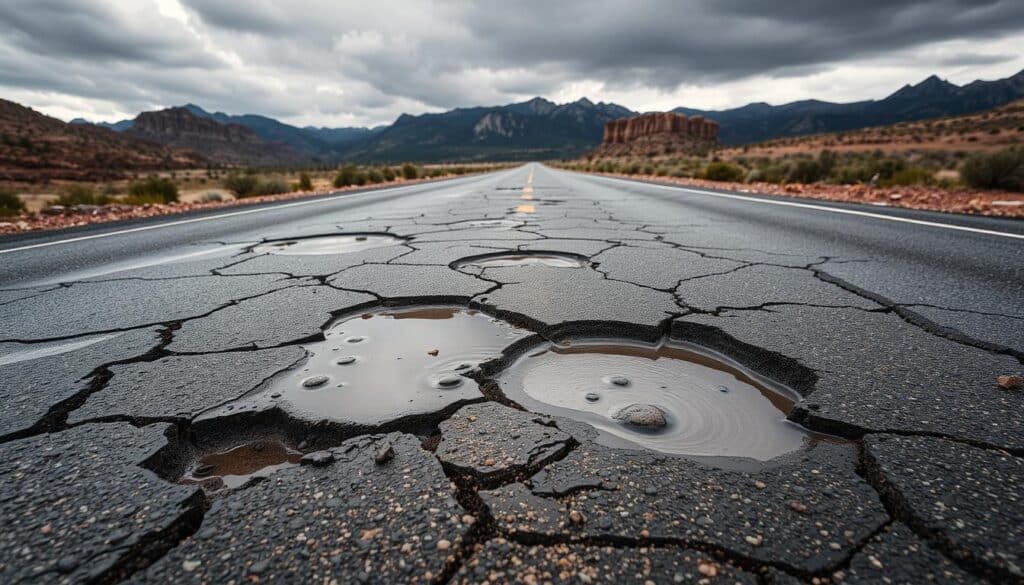
Standing water can really damage asphalt. Water that stays on the surface gets into the pavement, making it soft and crack. This is common where drainage is bad. Fixing this with good drainage is important for keeping asphalt in good shape.
When it gets warmer, it’s important to get rid of puddles. This stops water from getting into the pavement. Most states use treatments to fight moisture damage. Good drainage is crucial for asphalt health.
Groundwater Issues and Asphalt Integrity
Groundwater is a bigger problem for asphalt. It can push both the asphalt and its base apart. This can cause big problems that need expert help to fix. Finding and fixing groundwater issues is hard and often needs special knowledge.
Different methods work for treating groundwater, like using liquids or lime. Keeping an eye on it and treating it often is key. Some states test the asphalt to see if it’s still sensitive to moisture.
In Broomfield, fixing asphalt is a big job. They fill 20 to 40 potholes every day. They want to fix more potholes faster. They also want the community to help find and report asphalt problems.
Common Asphalt Problems in Colorado and How to Fix Them
In Colorado, the weather and heavy use on roads and driveways cause many asphalt problems. Knowing these issues and using the best repair methods can make your paved areas last longer and work better.
Edge Cracking: Causes and Remedies
Edge cracking happens near the edges of pavement. It’s caused by dry soil, lack of support, and heavy traffic. To fix it, remove plants that get too close and fill cracks with asphalt emulsion slurry. Also, improving drainage helps prevent more edge cracking.
Understanding Fatigue (Alligator) Cracking
Fatigue or alligator cracking looks like an alligator’s skin and shows wear from heavy loads. It can mean poor drainage or a weak base. To fix it, remove and replace the weak material with the right asphalt mix. This is a key part of the best asphalt repair in Colorado.
Solutions for Block Cracking
Block cracking has big, square patterns and comes from too little moisture or extreme temperatures. For small cracks, sealing them works. But for big ones, you might need to put a new layer of asphalt on top. This fixes the cracks and makes the surface stronger.
Hammers Seal Coat & Asphalt uses many repair methods like milling and overlay, infrared repair, and microsurfacing. They offer detailed solutions for common asphalt problems. Their tailored approach ensures your paved areas are both durable and look great.
“Colorado Springs has over 5,688 lane miles of paved roads. The city keeps them in good shape with methods like crack sealing, chip seal treatment, and dig-outs,” a report says. These efforts help make Colorado’s paved roads last longer and work better.
Dealing with UV Radiation on Asphalt Surfaces
UV radiation is a big problem for asphalt surfaces. It makes the oils in asphalt break down fast. Colorado gets over 300 sunny days a year, making this issue worse. This can damage both how your pavement looks and its strength.
A good solution is to sealcoat your asphalt regularly. Sealcoating creates a shield that protects the surface. Experts say to seal every five to six years. This keeps your asphalt strong against UV rays and weather.
It also saves money on upkeep in the long run.
Checking your asphalt often and fixing small problems quickly is key. This stops water from getting in and prevents potholes. Catching issues early keeps your community safe and looking good.
Here are some important steps to keep your asphalt in top shape:
- Regular Sealcoating
- Timely Crack Sealing
- Frequent Surface Inspections
- Prompt Pothole Repairs
Taking these steps helps fight UV damage and keeps your asphalt lasting longer. A good Pavement Management Plan (PMP) helps manage resources well. It makes sure you fix what needs fixing now and plan for the future.
Addressing Heavy Load Damage on Asphalt
Heavy load damage on asphalt is a big problem, especially in places like Colorado. Extreme temperatures and freeze-thaw cycles already weaken pavement. Too much weight from vehicles can cause it to deform and crack, leading to expensive repairs if not fixed quickly.
Preventive Measures to Minimize Load Impact
To lessen heavy load damage, it’s important to use both behavioral and structural steps. Good asphalt maintenance tips include:
- Limiting Heavy Loads: Don’t let heavy vehicles like trucks and construction equipment on new or sensitive asphalt, especially in extreme weather.
- Reinforcing Support Areas: Make sure areas that will carry heavy loads have strong, thick asphalt. Commercial lots need at least 6 inches, while driveways should be 4 inches thick.
- Regular Maintenance: Keep up with asphalt care by checking and maintaining it often. Sealcoating every two to three years helps protect it from more damage.
By taking these steps, you can lower the chance of heavy load damage. This helps your pavement last longer and stay usable.
Chemical Stains and Their Effects on Asphalt
Chemical stains, like those from oil and diesel, can harm asphalt surfaces. Since asphalt is oil-based, these stains can make it soften and wear down. It’s important to take care of your asphalt to keep it looking good and lasting longer.
How to Remove and Prevent Oil Stains
Quick action is key to getting rid of oil stains on asphalt. Here’s how to remove them and stop them from coming back:
- Immediate Action: For fresh oil stains, use absorbents like sawdust, baking soda, or kitty litter to soak up the oil.
- Cleaning Agents: Use cleaners like Simple Green, Coca-Cola, or biodegradable oven cleaner on the stain. Let it sit to break down the oil. Don’t use harsh solvents like paint thinner or turpentine, as they can make things worse.
- Brushing and Rinsing: After using the cleaner, scrub the area with a brush and then rinse well with water. If the stain is still there, repeat until it’s gone.
- Sealcoating: To keep stains away, sealcoat your asphalt every 2-3 years. Sealcoating acts as a shield, keeping water and chemicals out.
By recycling and taking these steps, you can save time and money on repairs. Keeping your asphalt clean and sealed will make it look better and last longer. This ensures a safe and smooth surface for years to come.
| Action | Benefit |
|---|---|
| Regular Cleaning | Prevents buildup of harmful materials |
| Sealcoating Every 2-3 Years | Extends life and protects the surface |
| Quick Stain Removal | Lessens damage and costly fixes |
Impact of Tree Roots on Asphalt
Tree roots can subtly but significantly affect asphalt by growing underneath and disturbing its foundation. This encroachment often results in visible cracks and upheaval years after initial pavement installation. Early signs of tree root asphalt damage include cracks, uneven surfaces, and shifting pavements, ultimately leading to tripping hazards and structural issues.
To prevent or mitigate tree root asphalt damage, several strategies can be implemented. Maintaining a safe distance of 5 to 10 feet between the tree base and hardscape is recommended to promote healthy root development and pavement stability. Additionally, using root barriers like Root Directors or Reroot Barriers can help redirect tree roots downward, preventing surface damage and pavement lift.
Another effective method for managing tree impact on pavement is to utilize soil vault systems. These systems allow tree roots to grow in optimal conditions while safeguarding surrounding infrastructure such as streets, carparks, and stormwater management. Similarly, installing bridges between tree roots and pavements can preserve the health and stability of tree roots, although this construction can be costly.
Professional tree care services also offer expert guidance in managing tree roots to prevent property damage and maintain the health of both trees and pavements. For instance, methods like compacting gravel or pebbles beneath sidewalks can guide tree roots along a path of least resistance, thus reducing the risk of pavement damage.
In conclusion, strategic planning and preventive measures are crucial for managing tree impact on pavement. Simple actions such as maintaining appropriate distances and using specialized tools can go a long way in ensuring the longevity and integrity of your asphalt surfaces.
Importance of Regular Sealcoating
Regular sealcoating is key to keeping your asphalt in top shape. It acts as a shield against UV rays and water. This slows down damage from oxidation, preventing cracks and brittle surfaces.
It keeps your asphalt flexible and strong. This protects it from harm.
How Sealcoating Extends Asphalt Lifespan
Sealcoating makes your asphalt last longer. A new coat makes the surface smooth and clean. This stops water and oxidation damage.
It also makes your asphalt look better. This boosts your property’s appeal. Plus, it lowers the chance of accidents from loose gravel or uneven areas.
Here are some key sealcoating benefits:
- Prevents water from seeping into the pavement, reducing the risk of freeze-thaw damage
- Protects against harmful UV rays that can deteriorate asphalt
- Enhances the appearance of asphalt, improving curb appeal
- Helps to maintain the pavement’s flexibility and integrity
Sealcoating Frequency Recommendations
Choosing the right sealcoating frequency is key. Sealcoat every two to three years, based on traffic and weather. Regular sealcoating saves money on big repairs or replacements.
Look out for these signs to sealcoat:
- Visible cracks
- Fading color
- Rough texture
- Loss of aggregate
While pros offer top results, DIY can save money. Just make sure you have the right tools and materials.
| Action | Benefits |
|---|---|
| Professional Sealcoating | Ensures high-quality, long-lasting results |
| DIY Sealcoating | Cost-effective but requires proper technique and materials |
Colorado Asphalt Problems Conclusion
Colorado’s unique asphalt problems need a deep understanding of the causes. Factors like extreme temperatures, water damage, UV exposure, chemical spills, and tree roots play a big role. These require specific asphalt repair strategies to keep pavements lasting longer.
Choosing the right materials and regular maintenance are key to sustainable asphalt solutions. High-quality asphalt, costing $2-$5 per square foot and lasting 20-25 years, is a good choice for Colorado’s climate. It’s cheaper and easier to install than concrete or natural stone, making it a smart pick for many.
Sealcoating is crucial for keeping Colorado’s pavement in good shape. It protects asphalt from UV rays and water, extending its life. Using recycled materials like Recycled Asphalt Pavement (RAP) and recycled concrete aggregate (RCA) also helps. They’re good for the environment and save on maintenance costs.
Following best practices in asphalt care improves your property’s safety and looks. It also strengthens your pavement’s structure and extends its life. With careful attention and informed choices, your pavement can stay smooth and last longer, saving you money in the long run.
Colorado Asphalt Problems FAQs
In Colorado, asphalt faces many problems. Edge cracking, fatigue (alligator) cracking, and block cracking are common. Extreme temperatures, water damage, and UV radiation also harm the pavement.
Extreme heat makes asphalt soft and prone to damage. It can get bruised by vehicle wheels and show impressions. Avoid heavy pressure on new asphalt in hot weather and keep heavy vehicles moving to prevent damage.
Cold weather makes asphalt hard and brittle. This increases the risk of chipping and cracking, especially at the edges. Be careful when applying pressure to pavement in very cold conditions.
Standing water weakens asphalt, causing it to soften and crack. Remove puddles quickly and ensure proper drainage to prevent water buildup.
Groundwater can displace asphalt and its base, causing cracks and potholes. A professional assessment may be needed to redirect water flow and prevent damage.



2 Comments
Comments are closed.